We use cookies on this website to ensure its proper functioning and to improve the quality of our services. Cookie Policy
Heshan Unamboowe is the home cook behind @bamboo_eats, a Sri Lankan recipe page run from a town about forty minutes outside Detroit. He has been posting recipe videos for just under a year. Before that, the account sat quietly for five or six years as a place to photograph whatever he happened to eat. He is an engineer by profession, a former national swimmer who represented Sri Lanka at the 2012 Olympic Games, and a new father. Cooking, he is careful to point out, is the thing he does because he loves it, not the thing he trained for.
The account existed long before the recipes did. For years Heshan used it the way most people use a camera roll, taking pictures of meals he cooked or ate and posting them without much thought. Late last year he decided to try making actual recipe videos.
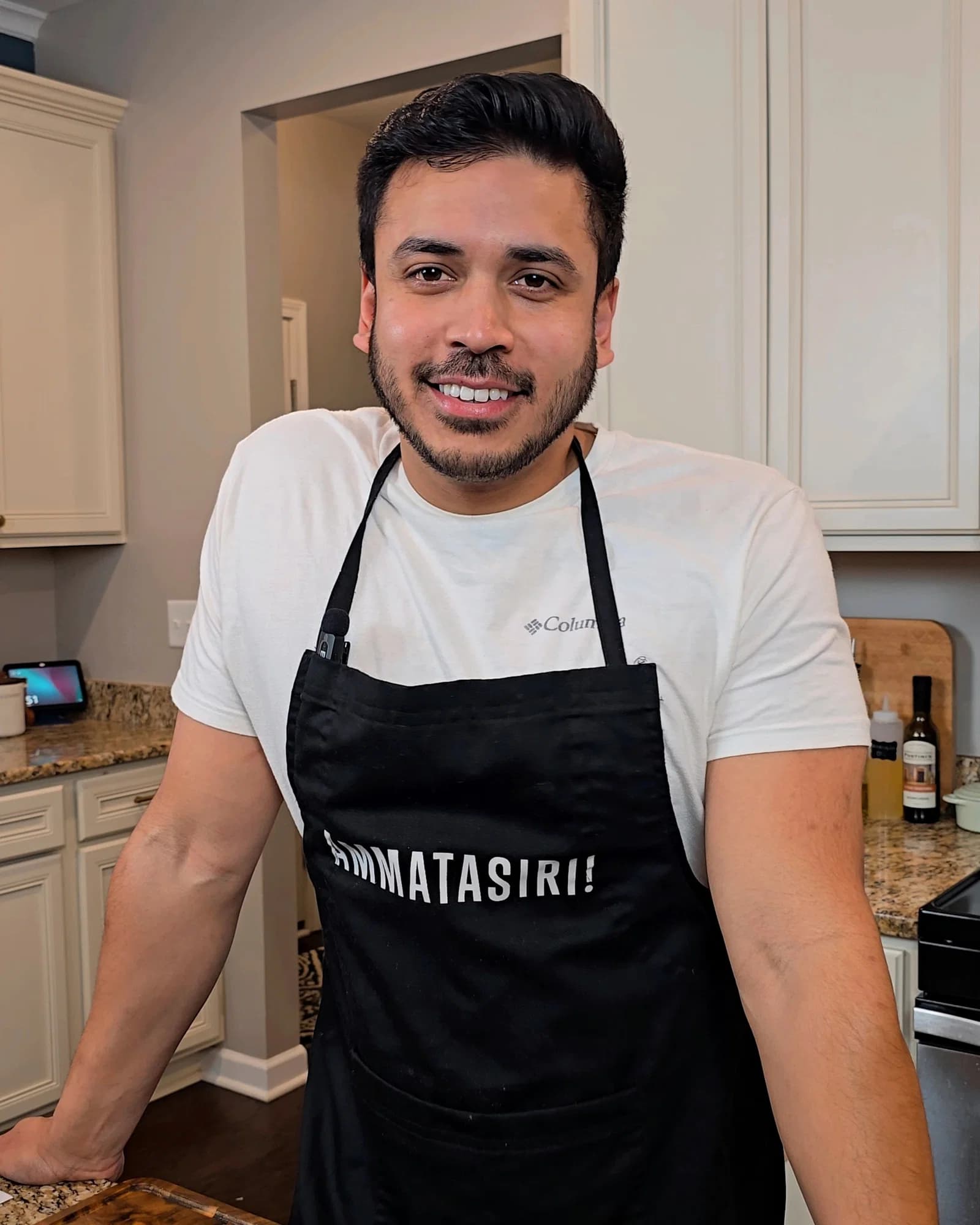
He started with Western food. The videos were, by his own assessment, well made, but the page went nowhere. So he shifted toward what he knew best, which was Sri Lankan cooking, and the response changed almost immediately. People resonated with the videos in a way they had not before, and the page took off. In under a year, his following across Instagram, TikTok, and Facebook grew organically to more than 200,000. He reads that number as evidence that a considerable number of people genuinely want to learn how to cook authentic Sri Lankan food. Watching it climb is satisfying, but it also comes with a sense of responsibility to give that audience what it needs.
Part of the reason he made the shift was the audience he had in mind. He was not thinking about a general food audience so much as Sri Lankans living outside Sri Lanka, and students in particular, the ones who miss their mother's cooking and default to eating out because they never learned how to make it themselves.
"I want to give them a little piece of home that they've been missing."
The name is not as considered as people assume. It comes from his surname, Unamboowe, which his friends shortened to Bamboo when he was growing up. The nickname stuck, and years later it turned into a food page. There is no deeper story than that, and he does not pretend otherwise.
His mother did most of the cooking at home, and she is the direct source of everything he knows. He is unusually firm about this.
"People watch my videos and think I'm an amazing cook, but that's because they haven't met my mom."
She is a serious baker as well as a cook, and Heshan describes her cakes as some of the most extravagant he has ever seen. He loved all of her savory dishes, but the cakes were his favorite thing to eat growing up, and they still are. His grandmother was also a large presence in his life and another source of the cooking he learned. He continues to learn from both.
That inheritance is a large part of why he takes the page seriously at all.

"It might just be food, but our food carries a lot of culture and a lot of history."
He wants to pass that on to his audience, to other Sri Lankans abroad, to anyone curious about the food, and eventually to his son.
Asked to name the one dish he would eat for the rest of his life, Heshan acknowledged what the expected answer would be. Kottu is the popular choice, the one most Sri Lankans would name, and he does not dislike it. He is simply not obsessed with it, and he suspects that admission will earn him some criticism.
His actual answer is string hoppers, though he immediately qualified it, because string hoppers are not really a single dish. They need a curry and a sambol alongside them. What he would choose, properly stated, is the string hopper meal.
Michigan is a genuine melting pot, and Heshan is quick to say so. Detroit has a large African American population and a deep soul food tradition, along with food native to the state, including Detroit style deep dish pizza. Dearborn has proportionally the largest Muslim and Arab American population in the United States, which brings a strong Arabic influence to the region, and there are significant South Asian and Japanese immigrant communities spread across the state.
His own town is another matter. It is not especially diverse, and finding restaurants that suit an ethnic palate is difficult. So is finding ingredients for his recipes. He describes his location, cheerfully, as the middle of nowhere.
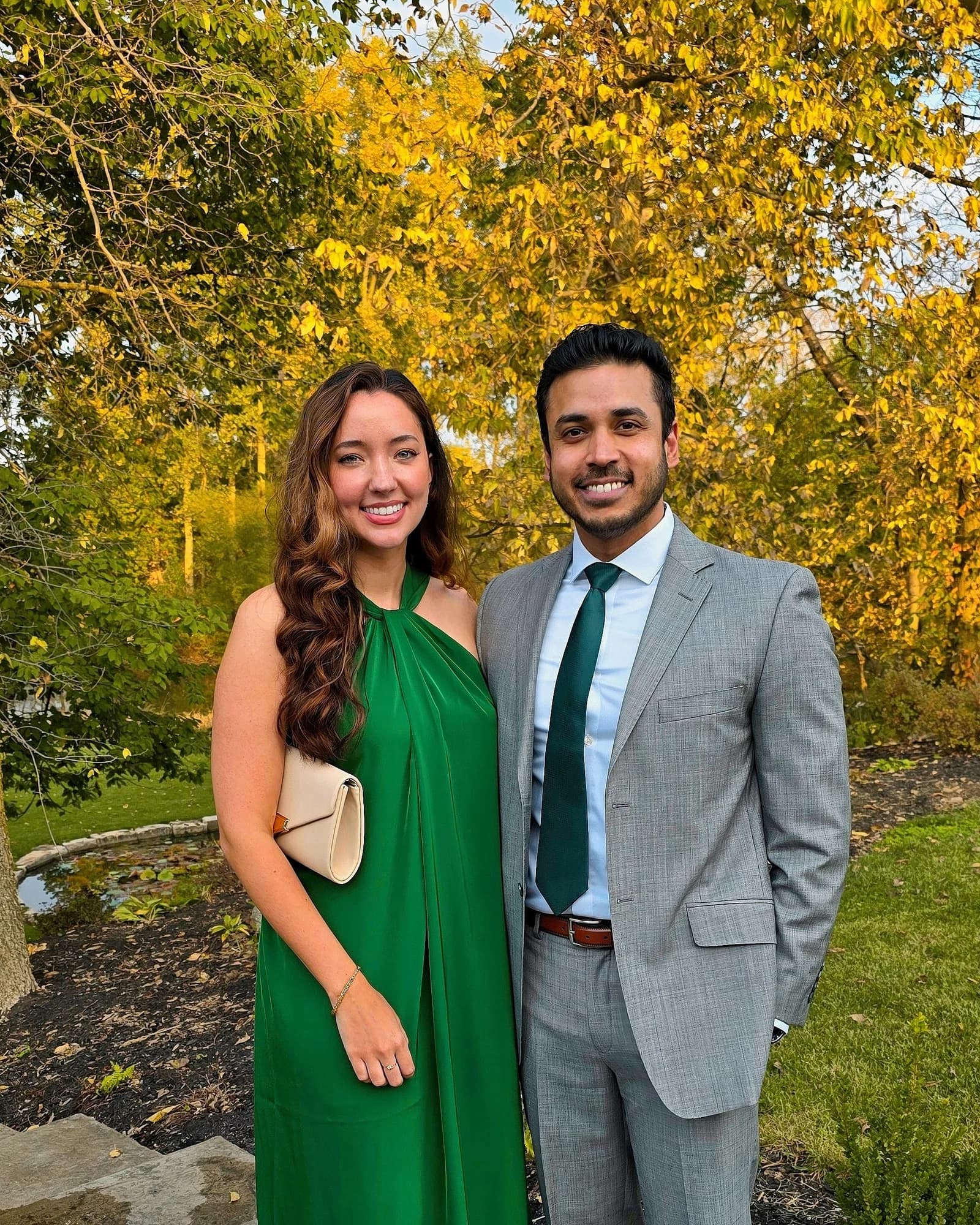
He and his wife get around this the way they get around most things, which is by traveling. Exploring restaurants and local food is one of their favorite things to do together, and for Heshan it is not only about eating. He wants to know how the dishes are made. Food, in his view, is one of the most direct ways to connect with people from other cultures.
The distance from home also shapes how his recipes are received. Living outside Sri Lanka, he cannot always get the food he grew up on, and he assumes his audience cannot either.
His recipe process splits into two categories. Family dishes, like a Sri Lankan chicken curry, need no experimenting at all. Those are household recipes passed down from his mother, and he learned the timing of the spices, the length of the cook, and the way to serve them directly from her.
Then there are the dishes he did not grow up with. Last year he discovered a range of Sri Lankan Muslim dishes that were unfamiliar to him, and he filmed one of them during Ramadan on his first attempt at making it. He told his audience exactly that, on camera. It turned out well, and it opened up a whole area of the cuisine he now wants to explore further.
When a dish matters enough, he will make it repeatedly until he is satisfied, and he has been known to hand plates to friends for honest feedback before anything gets published.
"I don't want to share a recipe just for the sake of sharing it."
The reasoning is straightforward. People follow him because they trust him, and a recipe that has not been tested properly costs him that trust. He would rather say it is his first attempt than pretend to be an expert.
He also brings humor into the work, mostly dad jokes layered into the voiceovers. A majority of his followers are there for the cooking, but he has noticed a contingent who show up for the narration.
Heshan has been asked whether he is a chef more times than he can count, and the answer is no. He works as a senior design engineer for an automotive supplier, a job with no connection to food whatsoever, and he is deliberate about the distinction. He calls himself a home cook and leaves it there.
In his view, the title of chef belongs to people who have been through culinary school, worked in restaurants for years, and built the skills that come with that. The word gets used loosely, and he would rather be precise about what he is, which is someone who likes to cook.
Would he like cooking and content creation to become the whole job one day? Yes. He does not think that is feasible right now, so the engineering career stays where it is.
Swimming came into his life at four years old, and not by choice. He had asthma, and a doctor recommended it. He hated the water at first and refused to go anywhere near the deep end. Three or four years in, his coach and his parents noticed he was unusually good at it, and by around eight he had won his first national championship in Sri Lanka, without any real understanding of what he had done.
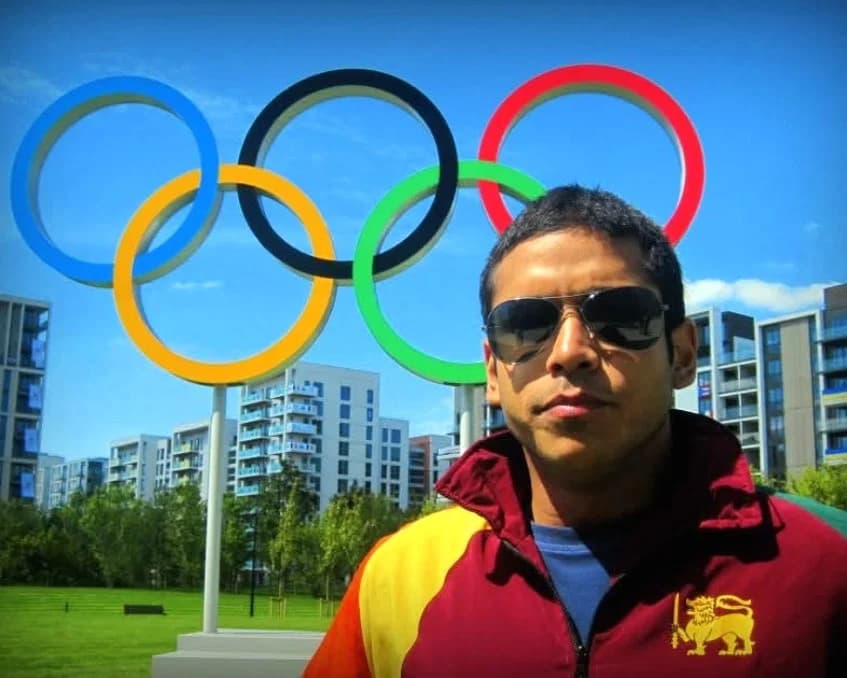
What followed was more than a decade representing Sri Lanka at the South Asian Games, the Asian Games, the Commonwealth Games, and the World Championships. He served as national swimming captain for several years. In 2012 he qualified for the Olympic Games in London, which he describes as the peak of his sporting career. He spent about a year training in Melbourne beforehand at a club that included several Olympic medalists.
After the Olympics he moved to the United States for his higher education and swam for his college while continuing to represent Sri Lanka.
The schedule was punishing. He was awake at 4:30, in the pool by 5am, at school straight after practice, then back to the pool in the afternoon. He credits the sport with instilling the self discipline he still relies on, and he misses it. He swims now and then, but no longer competitively.
The hardest part of content creation for Heshan is time. He has a full time job and a young child, and there is not much of the day left over. He knows the accepted wisdom is to post constantly, and he has decided not to follow it.
He is not criticizing anyone who does. It is simply not how he wants to work. He would rather take the time to get the recipe right and make the video genuinely instructional than push out something forgettable to fill a slot. He wants people to see his video appear and know they will get clear, usable instructions.
He is equally skeptical of measuring the work in numbers, which he thinks can tip into something unhealthy. There was a stretch early on when the page was not growing and he questioned whether it was worth doing at all. What settled him was remembering why he started, which was not to reach fifty thousand followers but because he liked cooking. Editing videos and developing recipes gave him satisfaction regardless of engagement, so he kept going, and eventually the page picked up.
His favorite part now is not the analytics. It is when someone sends him a photograph of a dish they made from one of his recipes and tells him their family loved it, or that he gave them the push they needed to cook their own food at home.
Heshan became a father earlier this year, and when asked where he draws his inspiration, he did not hesitate.
"It's wonderfully chaotic."
His son is seven months old and doing something new every day. Heshan says he and his wife are completely obsessed with him, and that fatherhood has made him want to be a better version of himself, partly because he wants to be a decent example as his son grows up.
His message to readers came from the same place. Life is short and tomorrow is not promised. As a Buddhist, he believes that being born human comes with an obligation to do the best you can with it, because conscience is what separates people from animals. Do good by others. Spread positivity. Stay in the moment.

"Live your life to the fullest today."
Heshan's long term vision is specific. His audience right now is largely Sri Lankan, and he is grateful for it, but he wants to reach much further than that.
The problem he keeps running into is recognition. People assume Sri Lankan food is the same as Indian food, and while there is real overlap, there are ingredients, cooking methods, and dishes that belong to Sri Lanka alone. He has also had the more basic version of this conversation many times, where he tells someone in Michigan where he is from and gets a blank look, and has to explain where the country is before anything else.
Sharing authentic recipes is, to him, a way of introducing the culture itself. He would like people to understand how Sri Lankans cook and what they eat on an ordinary day, and ideally to be curious enough to visit and try it there.
He has not experimented much with growth tactics. He sees the advice online and has not acted on any of it, preferring to let the growth happen organically, though he accepts he will need to try some things to reach an international audience. He also keeps a personal notebook of every recipe he develops, and he would like to get them documented online eventually, so people have somewhere to refer back to instead of half remembering a video.
For now he is going with the flow, which is roughly how he approaches most things.
Follow Heshan on Instagram at @bamboo_eats, where he shares authentic Sri Lankan recipes alongside the occasional excursion into Indian and Southeast Asian cooking. Chefadora is proud to spotlight creators like Heshan who are keeping regional food cultures alive far from home and making them accessible to anyone willing to try cooking them.
Updated on 29 Sept 2026
Save recipes from anywhere, and get answers, swaps, and help as you cook.

