We use cookies on this website to ensure its proper functioning and to improve the quality of our services. Cookie Policy
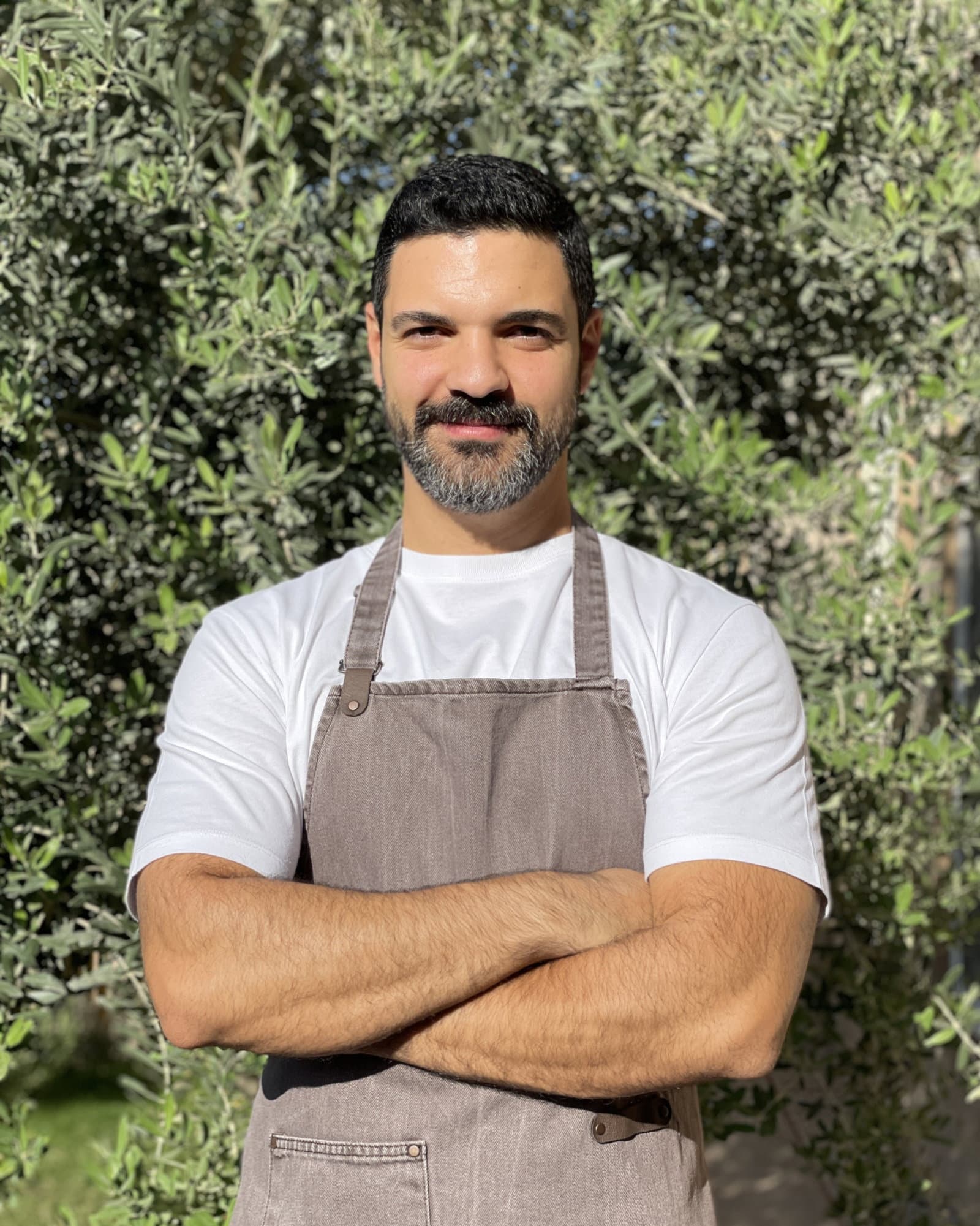
Georges Cheaib is the cook behind @foodienxtdoor, a Lebanese food page based in Erbil, Iraq, where he has lived for the past five years for the family business. Entirely self-taught, with no formal culinary training, Georges shoots his content outdoors in the kind of heat most cooks would refuse to work in, posts in both Arabic and English, and built one of the fastest-growing Lebanese food pages on Instagram in just seven months.
His mission is straightforward: share the food of his culture with as much transparency as possible, so that anyone watching can actually cook it themselves.
Georges traces his cooking back to age 12 or 13, when he started slipping into the kitchen to help his mother. He was eager, but he also made a mess, and his mother eventually started kicking him out.
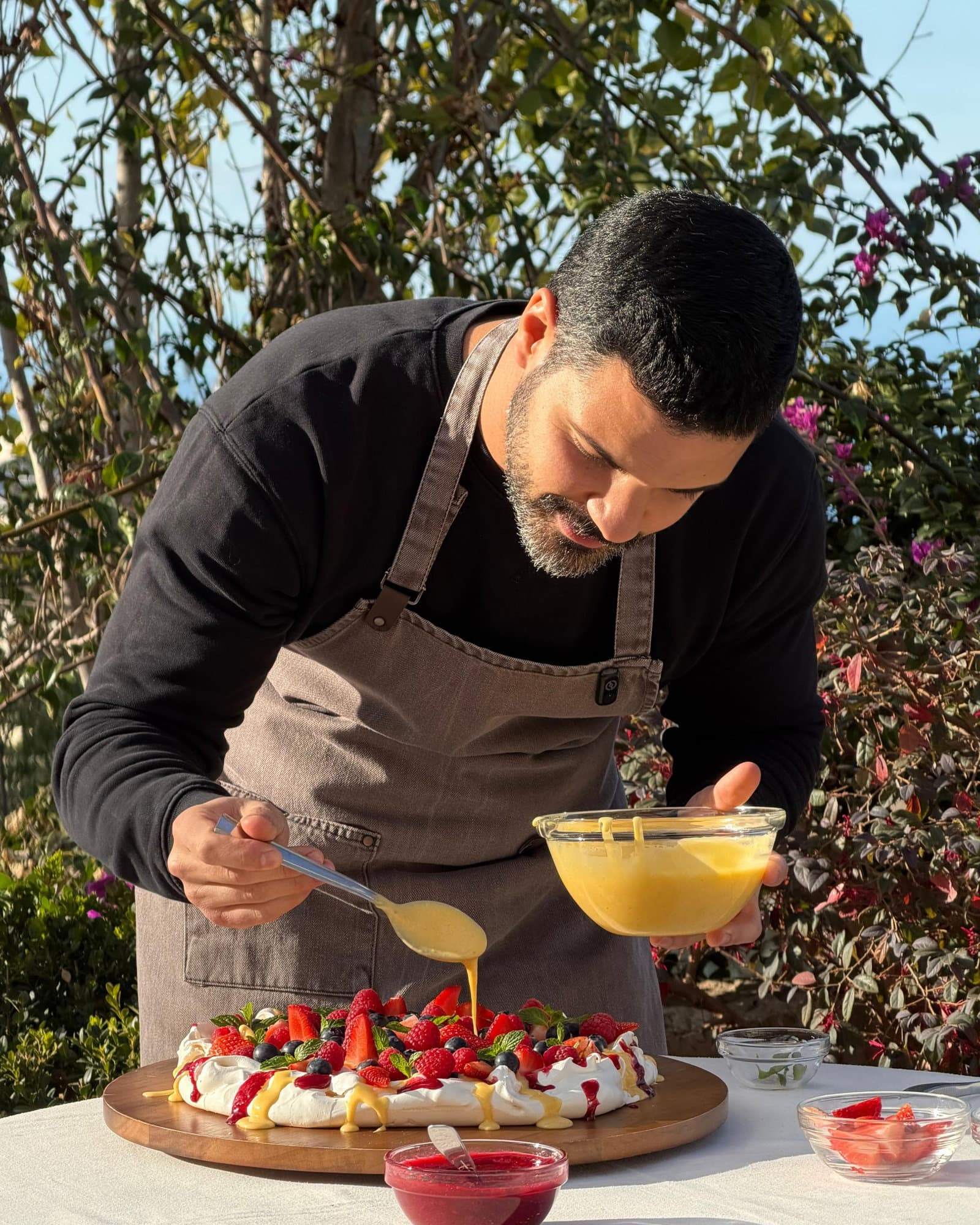
"I used to wait for her to leave the house so I could cook," he says.
That stubbornness set the pattern for the rest of his cooking life. No one taught him formally. He picked things up by watching his mother, by paying attention to traditional Lebanese cooking, and by experimenting on his own. "I'm completely self-taught," he says. As he got older and started traveling, he made it a point to try new foods everywhere he went, learning from different cuisines and absorbing techniques he could later translate into his own work.
Georges's content is firmly anchored in Lebanese and broader Mediterranean cuisines. He gravitates toward the dishes he grew up on, then layers in the Mediterranean and Levantine flavors that share so much DNA with his own culinary tradition.
"I like to combine these types of flavors together, which are very close to my heart," he says. "Whenever I cook for someone using these flavors, this is where I feel like they are happy the most."
The work is not about innovation for its own sake. It is about preserving and presenting a food culture he loves, with his own touch.
When asked to name his favorite dish, Georges struggled to pick just one. The dishes he eventually landed on were both samke harra, the famous Lebanese spicy fish dish, in its two main regional variations.
The Tripoli version is built on a tahini-based sauce cooked with mixed peppers, spices, a touch of chili, and walnuts as the highlight ingredient. The Beirut version, which he has published on his page, is vegetable-based, without tahini, and produces a sauce that resembles a thick chutney. The vegetables are cooked down but still hold their shape, and the dish carries clear notes of cumin and fresh coriander throughout.
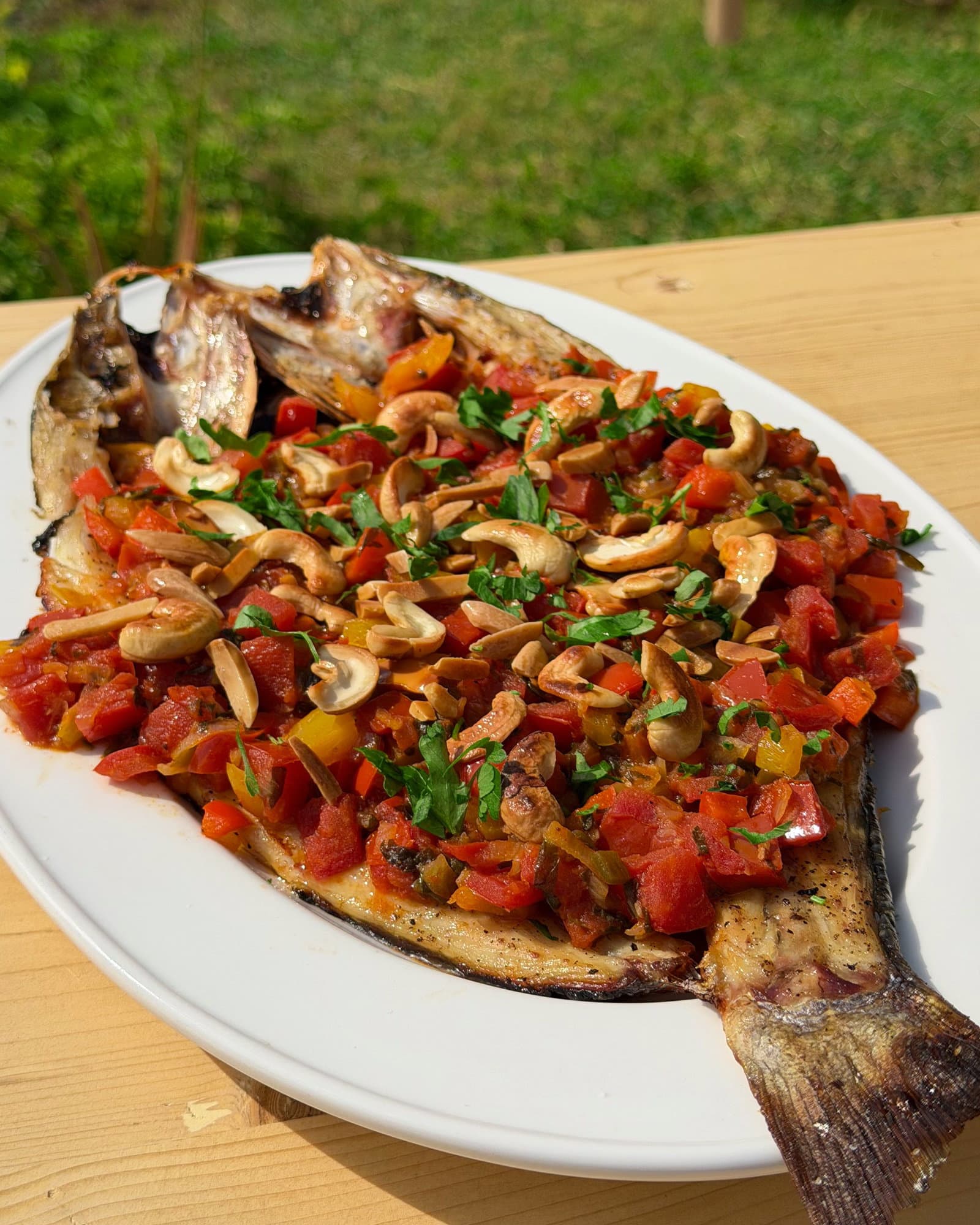
What makes the dish particularly meaningful to him is the memory attached to it. Samke harra was a special-occasion dish in his family, often cooked around Christmas.
"It's beautiful to be served as a whole big fish, and everyone can enjoy it at the same time," he says. "It's not an individual portion."
That communal element is what defines so much of Lebanese cooking, and it is woven through everything Georges does.
Georges's recipe development process is intuitive in a literal sense. "I usually come up with my recipes while trying to sleep," he says. "Maybe this is when my brain is at its most resting state. I don't have anything in my mind, so I just try to come up with, let's say, gather some flavors I tried the same day or dishes I tried at some restaurants or at some people's places."
He files those ideas overnight and executes them the next day or whenever he is ready to film. For traditional dishes, he holds to the original framework but adds his own seasoning preferences. For new creations, he can usually taste a dish in his mind before he makes it, which helps him know when something is on track and when it needs work.
When a recipe does not come together as planned, he repeats it until it does. The failures are not catastrophic, in his experience. They are just signals that an ingredient needs adjusting.
When Georges started his page, he had a specific person in mind: his siblings. They like food but do not know how to cook, and he used to send them voice messages or video calls walking through every step of a dish.
That informal teaching style became the blueprint for everything he publishes. There are no shortcuts hidden in the caption. There are no trade secrets. Every viewer is treated like a sibling he is trying to teach.
"I wanted the content to be very transparent and very informative of every single step, imagined every viewer as one of my siblings," he says.
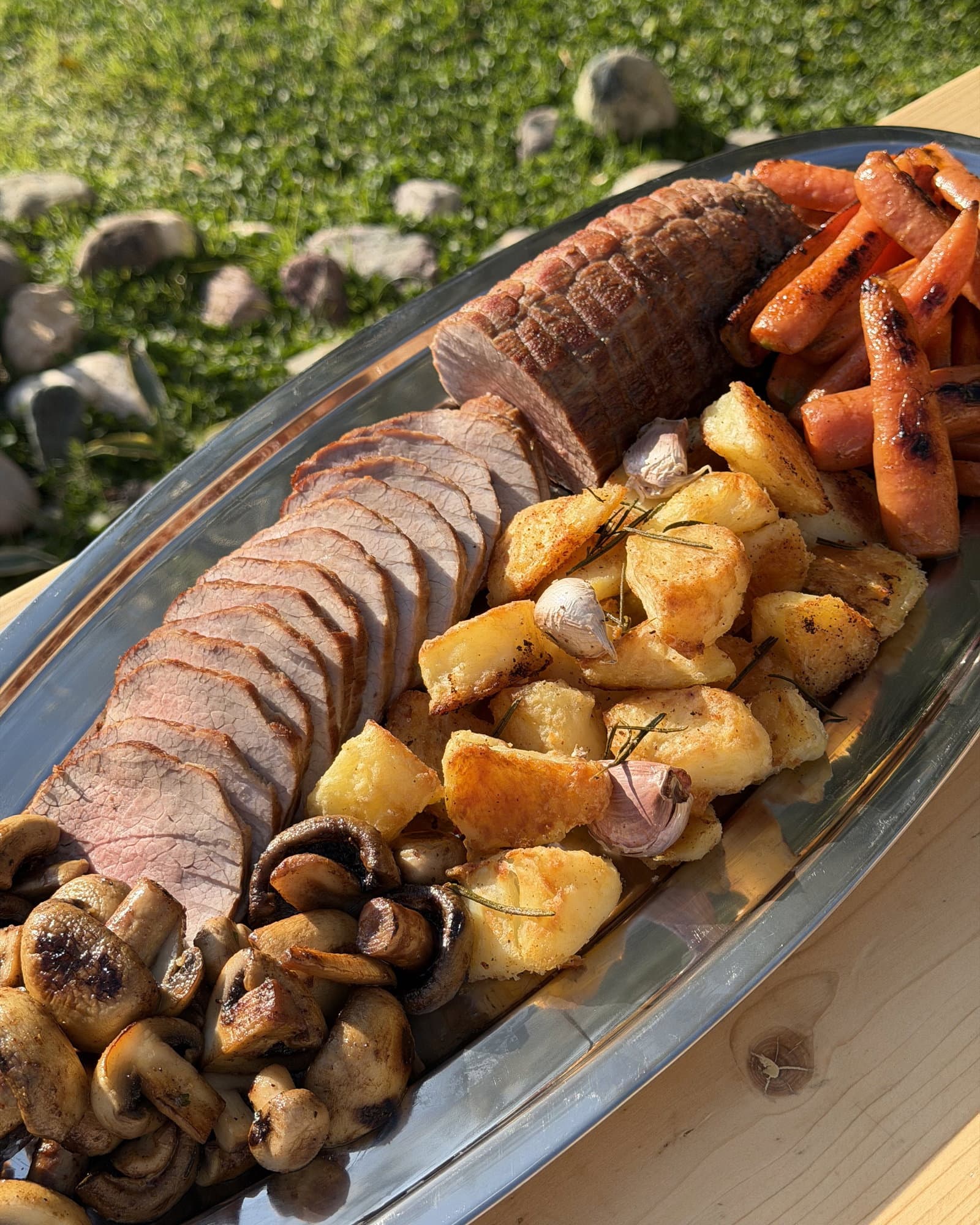
The strategy is working. His account is only seven months old and has grown quickly. He posts in both Arabic and English, making his recipes accessible across language barriers, and the audience has responded.
The most physically demanding part of Georges's content creation is the climate. Erbil summers regularly reach 52 to 53 degrees Celsius, and he insists on filming outdoors because it gives the videos a natural, calming feel that he believes audiences respond to.
His solution is to start early. He begins filming around 6am and tries to wrap by 10 or 11am before the heat becomes unbearable. "It is one of the toughest challenges," he says. The greenery in the background, the sense of openness, the natural light — for him, these are worth the early start.
The other constant challenge is sourcing ingredients. Many of the herbs and spices central to Lebanese cooking are not available locally, so he plants what he can himself and asks family and friends traveling from Lebanon to bring back the rest. "This is every expat's situation all over the world," he says. "Whenever they miss their ingredients, they ask someone from back home to send it to them."
Georges credits much of his momentum to his wife, who films him and has been his biggest source of motivation since the beginning. The idea for the page had been brewing for years. He and his wife used to host friends and family at their home every single week, and their guests kept telling them they should start sharing their food online. Eventually, Georges decided to try.
The reality of content creation surprised him. A dish that takes 30 minutes to cook at home can take three times as long to film. The learning curve was steep at first. But over time it became second nature. "The time that I'm spending while content creating, I feel like it's meditative for me," he says. "I forget about everything and just start filming."
When asked if he had a message for his readers, Georges turned the question around. He directed his words at other chefs and cooks.
"I'd love for the chefs to keep doing what they are doing," he says. "They are the inspiration for us, and they are what keeps me going to discover new tastes, new recipes, new foods. We are lucky to have them."
It is a generous answer, and it reflects how he sees his own work. Not in competition with anyone, but as one more voice contributing to a much larger conversation about food.
Georges Cheaib's food page is the result of years of cooking, a family business that took him far from home, and a wife who picked up a camera. The dishes he shares are the ones his mother taught him, the ones he grew up eating around the family table, and the ones that have meant something to him for as long as he can remember. The work is meticulous, the execution is honest, and the mission is clear: keep Lebanese food alive for anyone willing to learn how to cook it.
Explore Georges' recipes on Chefadora at chefadora.com/@foodienxtdoor and follow him on Instagram at @foodienxtdoor, where he shares authentic Lebanese and Mediterranean recipes filmed from his outdoor kitchen in Erbil, in both English and Arabic. Chefadora is proud to spotlight creators like Georges who are bridging cultures through food and preserving regional culinary traditions for the next generation.
Updated on 29 Jun 2026
Save recipes from anywhere, and get answers, swaps, and help as you cook.

