We use cookies on this website to ensure its proper functioning and to improve the quality of our services. Cookie Policy
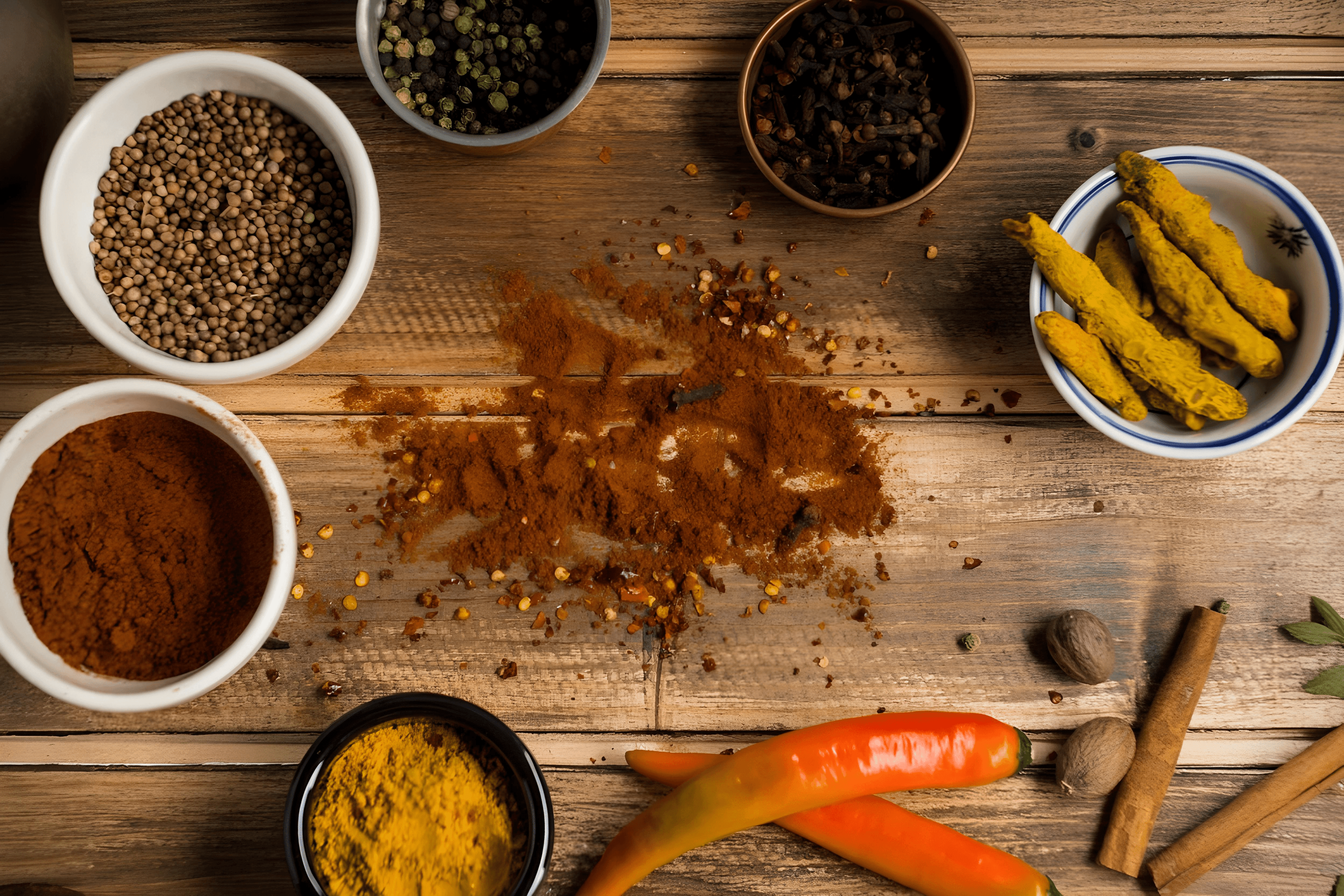
Have you ever noticed how a simple homemade dal or sabzi can taste richer, fresher, and more comforting than expected, sometimes even better than restaurant food?
The secret behind truly flavorful Indian food often isn’t the recipe. It’s the spices and masalas. In Indian cooking, spices don’t just add “heat.” They create aroma, depth, colour, and balance. Store-bought blends are convenient, but homemade masalas and freshly ground spices bring a freshness (and control) that packaged powders rarely match.
In this article, you’ll learn:
This is where many beginners get confused, so let’s simplify it.
A spice is usually a single ingredient, used whole or powdered. Examples: cumin (jeera), coriander (dhania), turmeric (haldi), black pepper, cloves, cinnamon.
A masala is a blend of multiple spices mixed in specific ratios to create a certain flavour profile. Examples: garam masala, chana masala, biryani masala, sambar powder, rasam powder, chai masala, chat masala.
Read about different types of garam masala
In short:
✅ Spice = one ingredient
✅ Masala = a spice blend
“Homemade spices” doesn’t mean home-grown spices. It means taking whole spices and turning them into fresh powders at home like roasting cumin seeds and grinding them into jeera powder. The basic steps are:
Homemade masalas (spice blends) are made the same way, just with multiple spices combined.
These blends are the backbone of countless Indian dishes.
The biggest difference between homemade and store-bought blends is freshness.
Whole spices contain natural essential oils that carry flavour and aroma. Once ground, those oils begin fading much faster. That’s why freshly ground spices:
That first fragrance when masala hits hot oil? That’s freshness and it’s hard for packaged blends to compete.
Store-bought blends are designed for “average” taste. But your home isn’t average.
Homemade masalas let you control:
Examples:
This is how your cooking becomes consistent and uniquely yours.
Many commercial spice blends may include extras such as:
Homemade blends are simply spices + nothing else.
That purity shows up in flavour and it’s one of the main reasons homemade masalas feel “cleaner” and more authentic.
Aroma is a major part of taste. Freshly roasted spices release oils that:
Even basic dal, khichdi, or aloo sabzi can feel more exciting with a freshly ground masala.
Spices are more than flavour; they’ve been used for generations in Indian kitchens as part of everyday wellness. Fresher spices retain more of their natural compounds, including:
Examples:
Homemade masalas don’t “cure” anything but cleaner, fresher spices can support a healthier everyday diet.
For recipes and everyday cooking ideas, explore Leena's full recipe collection: chefadora.com/leenakohli
Whole spices can feel expensive upfront, but they often save money long-term because:
Think of it as a pantry upgrade that pays you back slowly.
Every household has a flavour identity.
Homemade blends let you:
Over time, your masala becomes your “signature" people remember you by.
Read about different types of garam masala
Store-bought spice blends
Homemade masalas
Both are useful, but homemade usually wins for flavour and freshness.
If you’re just starting, make one or two blends you’ll actually use.
Great beginner options:
Start small. One fresh blend can change your cooking instantly.
For maximum flavour:
✅ Dry roast on low heat (never high)
✅ Cool completely before grinding
✅ Grind in small batches
✅ Store in airtight glass containers
✅ Keep away from sunlight, moisture, and stove steam
✅ Label jars with the date
✅ Always use a dry spoon
Best flavour window: 4–8 weeks
Still usable: up to ~3 months (if stored well)
❌ Over-roasting (causes bitterness)
❌ Grinding while hot (creates moisture → clumping)
❌ Making huge “year-long” batches
❌ Storing in plastic containers
❌ Mixing old and new batches together
Avoid these and your masalas stay fragrant and fresh.
1) What do you mean by “homemade spices”?
It means preparing spices at home from whole spices like roasting and grinding cumin seeds into jeera powder. It doesn’t mean growing spices at home.
2) What’s the difference between a spice and a masala?
A spice is one ingredient (whole or ground). A masala is a blend of multiple spices in a specific ratio. Easy memory: Spice = one. Masala = mix.
3) Is homemade masala healthier than store-bought? Often, yes. It’s because you avoid anti-caking agents, artificial colours, excess salt, and fillers. Fresher spices may also retain more of their natural compounds.
4) Do I have to dry-roast spices before grinding? Not always, but for most Indian masalas, light roasting makes a big difference in aroma and removes rawness.
5) Why did my masala turn bitter? Usually from roasting on high heat, roasting too long, or burning delicate spices (cloves/cardamom/cinnamon). Roast low and stop when it smells warm and toasty.
6) How do I know when roasting is done? Use the smell test: it starts mild and becomes strongly aromatic. If it smells smoky or looks too dark, it’s over-roasted.
7) Can I grind spices in a normal mixer grinder?
Yes. Use a small jar for small batches.
Tip: grind → sieve → regrind the coarse bits for a fine powder.
8) My masala clumps in the jar, why? Moisture; usually from grinding warm spices, using a wet spoon/jar, or storing near steam. Cool fully, store away from the stove, and always use a dry spoon.
9) How long do homemade masalas last? For best flavour, 4 - 8 weeks. They can stay usable up to ~3 months if stored airtight, dry, and away from sunlight.
10) Should I refrigerate masalas? Usually no. A cool, dry cupboard is ideal. In very humid climates, you can freeze small batches just avoid condensation.
11) What’s the easiest masala to start with? Garam masala - it’s the most versatile and beginner-friendly.
Homemade masalas and freshly ground spices aren’t just ingredients, they’re the foundation of truly flavourful Indian cooking. They bring freshness, strong aroma, better taste control, cleaner ingredients, and a deeper connection to your food
Store-bought blends have their place. But if you want everyday meals to taste more vibrant and authentic, start with just one homemade masala.
Once you taste the difference, it’s hard to go back.
Updated on 24 Dec 2025
Save recipes from anywhere, and get answers, swaps, and help as you cook.

