We use cookies on this website to ensure its proper functioning and to improve the quality of our services. Cookie Policy
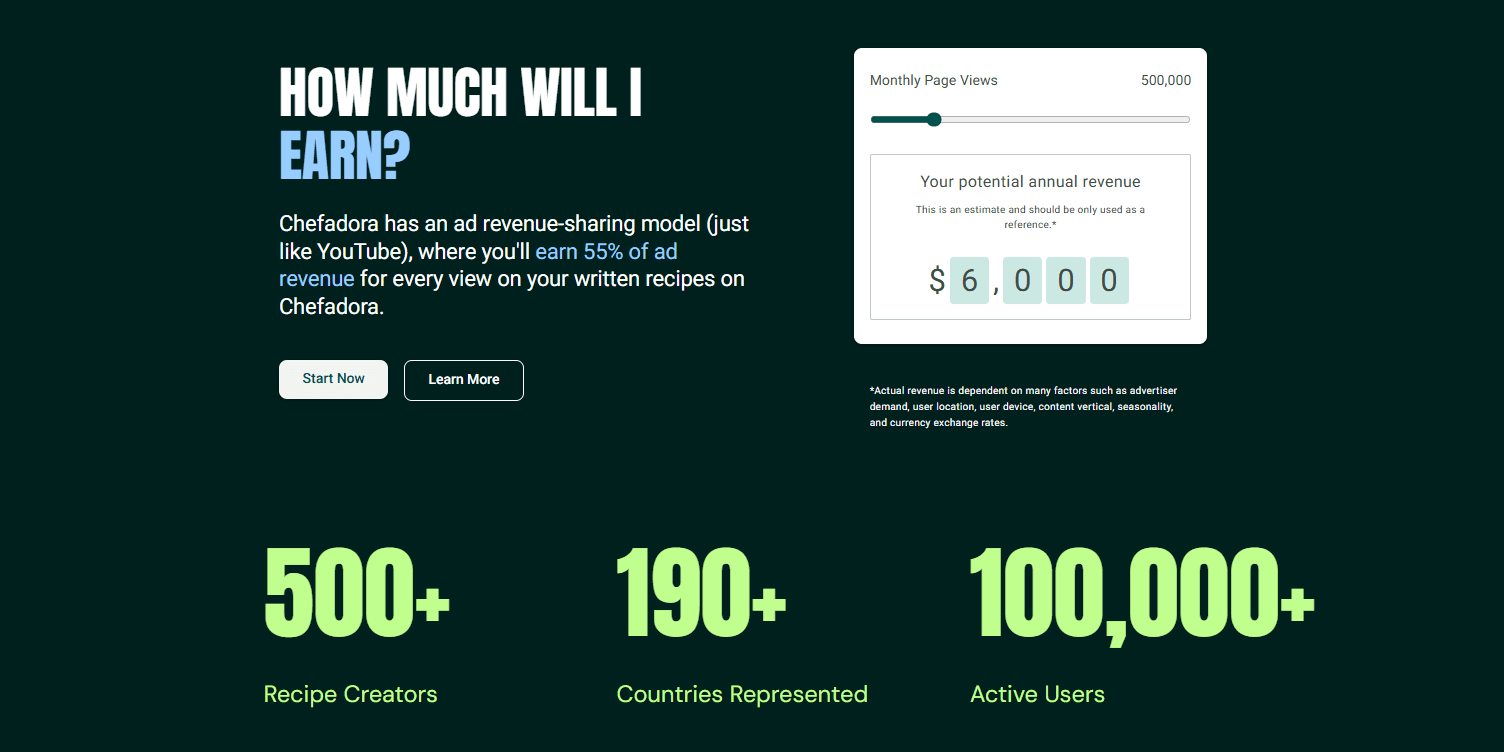
Yes, you can make money selling recipes without a food blog, a social following, or any technical setup. On Chefadora.com, cooks from 190+ countries earn through ad revenue, affiliate links, and referral programs, all for free.
Most articles on this topic are written by people who ran a food blog for six months and declared themselves experts. This one is different. At Chefadora, we've spent over three years watching 500+ recipe creators work through exactly this question. We know what actually works. We know what kills momentum early. And we've watched people with no audience, no website, and no social media presence go from complete unknowns to consistent earners.
Here's what we actually know.
Yes - but not the way most people picture it.
If you're expecting a paycheck from your first ten recipes, that's not what happens. And if you think going viral is the path, that's not it either. What you can build with patience and some method is worth pursuing.
One data point worth knowing : food content is one of the most profitable niches online. A RankIQ survey of 803 food bloggers found a median monthly income of $9,169. That's not what a new creator earns in year one - the floor is much lower, usually somewhere between nothing and a few hundred dollars a month, climbing as traffic compounds. But it shows where the ceiling actually sits, and that ceiling is real.
On Chefadora, creators earn through three income streams : ad revenue from their recipe pages, affiliate links in their content, and referral programs. None of it requires managing a website, applying to ad networks, or understanding how monetisation works under the hood. The platform handles the infrastructure. Creators bring the recipes.
Not all recipe income comes from the same place. Here's a plain breakdown:
Ad revenue. When someone visits your recipe page and sees an ad, you earn a share of that revenue. The more traffic your pages get, the more these compounds. On Chefadora, ad revenue is built into the platform - no traffic thresholds to qualify for, no separate ad network applications.
Affiliate links. Recipe content is a natural fit for ingredient and kitchen equipment links. A pasta recipe can link to the pasta you actually use. A bread recipe can link to a Dutch oven. When someone clicks and buys, you earn a commission from every page that stays live and gets found.
The Chefadora Partner Program. It is an invite-only initiative for select recipe creators. Unlike standard users, who must reach 10,000 lifetime views before monetisation, partners can start earning from day one without meeting this threshold.
We've watched a lot of creators stumble in the same places. These aren't obscure mistakes. They're fixable, and knowing them upfront saves months of frustration.
This is the most common one.Step-by-step images show readers what they should be looking at during each stage. They build trust. They make a recipe feel doable for someone who has never made it before. Skip the photos and you're asking a stranger to follow instructions with their eyes closed.
A missing ingredient. A step that jumps ahead without explaining something the reader needs. These feel like minor oversights but they break the experience completely. If someone is halfway through cooking and realises your recipe left something out, they're not coming back.
This surprises people, but it matters more than almost anything else. There's a real difference between "chicken roll" and "tandoori chicken roll." One is vague. The other tells the reader exactly what they're getting - the flavour, the style, the regional identity of the dish. Specific names help your recipes surface in the right searches and find the right readers. That's a better audience, and a more loyal one.
Most new creators think about photos first and names last. It should be the other way around.
The name of your recipe is what Google indexes, what AI assistants cite when someone asks what to make for dinner tonight, and the first signal a reader uses to decide whether to click. A generic name competes with millions of other generic names. A specific name carves out a smaller, clearer territory and wins it.
A few patterns that consistently work :
Include the regional or native name. "Garlic Jackfruit (Kathal Ki Sabji)" surfaces in searches for both the English and Hindi terms. One title, twice the reach.
Name the cooking method when it matters. "One Pot Chicken Pasta" is not just pasta - it's pasta someone can make without juggling multiple pans. That's what turns a scroll into a click.
Name what the recipe doesn't do, if that's the point. "No Fry Chicken Nuggets" directly answers a real search. Not frying is the feature. Put it in the title.
None of this is complicated. It's being precise about what you actually made, and trusting that precision will find the right reader.
Three questions we get all the time. Short answers: no, no, and no.
Do you need a food blog? No. You don't need a website, a domain, or a hosting plan. Chefadora gives you everything a blog would - a public page for every recipe, SEO handled, ad revenue built in without the setup cost or technical overhead.
Do you need social media followers? No. Some of the best-performing creators on Chefadora have no Instagram, no TikTok, no YouTube. They earn from search traffic to their recipe pages. Social media can help accelerate things, but it's not a prerequisite.
Do you need cooking qualifications? No. Chefadora is open to anyone who cooks. No certifications, no professional experience required. If you make food people would want to eat, you can publish on the platform.
The biggest barrier for new recipe creators isn't the cooking, it's the formatting. Most people know how to make great food. Very few know how to write a recipe in a way that's structured and readable for someone who has never made it.
Recipe Genie handles this. You put in a rough version of your recipe - however you'd normally write it for yourself and it structures everything automatically: ingredient list, step-by-step instructions, cooking times. You don't need to know how to format a recipe professionally. You just need to know how to cook.
SEO is handled for you. Recipe titles, page structure, metadata - the technical work that determines whether your recipe shows up when someone searches on Google or asks an AI assistant what to make for dinner is managed by Chefadora. Creators don't need to learn SEO. We take care of it so their recipes have the best possible chance of being found.
No cost to join. No fees to upload, no subscription, no hidden charges.
The only investment is your time and your recipes.
People search for recipes every single day - for weeknight dinners, for special occasions, for dishes they ate at someone's house years ago and can't stop thinking about. According to Statista, 43% of internet users globally rely on recipe sites and apps for meal inspiration. That's not a niche. That's a huge chunk of the internet, searching every day, for exactly what you already know how to make.
If you already cook well, you're sitting on something people are actively looking for. The question is whether you're putting it somewhere they can find it.
The worst realistic outcome: your recipes don't get traffic and you don't earn anything. Which puts you exactly where you are right now, except your recipes are published online, permanently, and could start getting discovered at any point.
The best outcome : income from something you already know how to do, building steadily in the background.
No new skill required. You're already an expert. You just need somewhere to publish.
If you cook, you qualify. Chefadora.com is home to creators from 190+ countries, home cooks, grandmothers with generational recipes, people cooking traditional dishes from their culture, weeknight cooks with fast practical ideas, and everyone in between. Not food influencers. Not professional chefs. Just people who know how to cook and want to share it somewhere it can actually be found.
Upload your first recipe, let Recipe Genie structure it, and start building something that earns while you sleep.
Create your free Chefadora account and publish your first recipe today.
Q1. Can you make money selling recipes?
A1. Yes. Recipe creators earn through ad revenue on their recipe pages, affiliate links, and referral programs. The income isn't immediate, it builds as your pages get traffic - but it's genuine income that compounds over time. On Chefadora, all three income streams are available to every creator at no cost.
Q2. How do recipe creators earn money online?
A2. The main income streams are ad revenue from recipe page traffic, affiliate commissions from ingredient and equipment links, and referral programs. Creators who use all three tend to earn the most. On Chefadora, these are built into the platform - no separate account setup required.
Q3. Do you need a food blog to earn from recipes?
A3. No. Platforms like Chefadora give every creator a public recipe page with built-in SEO and ad revenue, without requiring a separate website. You get the earnings potential of a food blog without the setup cost or technical maintenance.
Q4. Can home cooks sell recipes without cooking qualifications?
A4. Yes. No certifications, no culinary training, no professional experience required. Some of the highest-earning creators on Chefadora are home cooks with no formal background and no social media presence. The only requirement is recipes people would actually want to cook.
Q5. Do you need social media followers to earn from recipes?
A5. No. Recipe pages on Chefadora earn through Google search traffic, not social media reach. Many of chefadora’s top earners have no Instagram or TikTok presence. Income comes from people finding your recipe in search, not from people following you.
Q6. Is it free to publish recipes on Chefadora?
A6. Yes. No cost to join, no subscription fee, no charge per recipe. Chefadora is completely free for creators.
Updated on 22 Jun 2026

Save recipes from anywhere, and get answers, swaps, and help as you cook.

