Aditi Bhanushali: Keep Being a Student
An oven promised for good exam results set Aditi on a path through a psychology degree, pastry school, and a freelance career where she is still proving, room by room, that she belongs there as a chef.
by Gopika PV
Aditi Bhanushali is a pastry chef based in Mumbai, where she freelances as a recipe developer, menu consultant, baking teacher, and on-set chef for food and beverage brands. Her Instagram, @foodblogandshiz, is full of plated desserts, pies, and the occasional loaf of bread, though she is quick to say it is a portfolio rather than an influencer's feed. At 25, with a pastry diploma and seven years of posting behind her, she is still regularly asked to prove she is a real chef, and her answer has been to keep learning.
Table of Contents
- Lychees, chaat, and a family of fruit lovers
- An oven, a psychology degree, and a pandemic detour
- An Instagram feed that works as a portfolio
- Breads at heart, desserts on the feed
- A jar of Chinese sesame paste and a new cookie
- The brownie she cracked and the babka she hasn't
- Seven years without trending audio
- "How old are you?"
- Truffle fries, pan-Asian menus, and knowing your market
- What keeps her going
- Keep being a student
Lychees, chaat, and a family of fruit lovers
Aditi grew up in a family that cared about two things that rarely share a plate: nutrition and flavor. Early on she noticed that she wanted her food to taste good, and that a part of her always asked whether it was also good for her. That pull between pleasure and health would shape her first experiments in the kitchen.
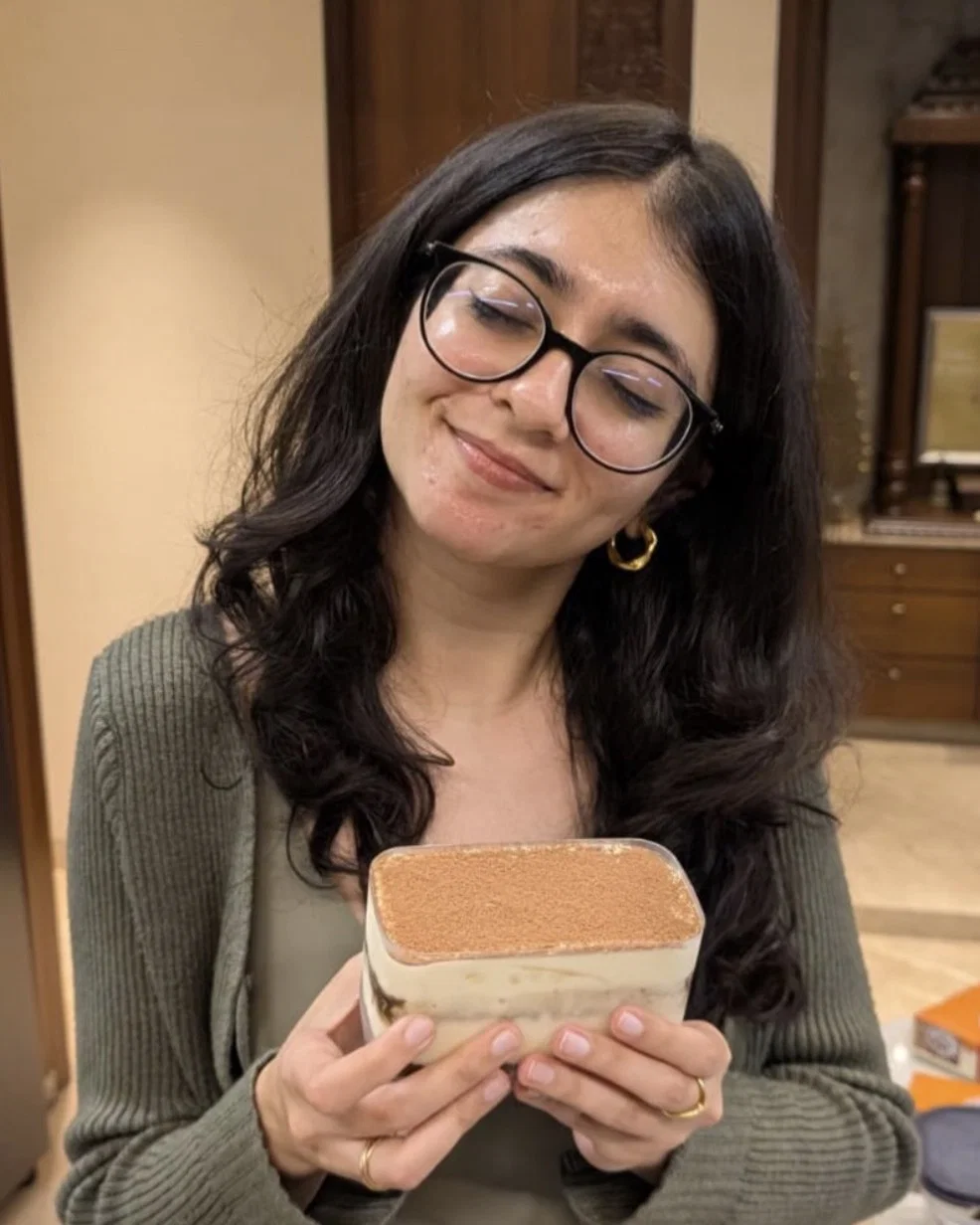
Fruit was central at home. Her parents did not grow up wealthy, and back in the 1970s, when bringing fruit home was unusual for a family like theirs, her grandfather made sure the house was full of it, including lychees, which were not common locally at the time. The habit stuck. Aditi says she could happily live on fruit for several meals in a row.
"It does not sound like a diet almost to me. It sounds like a treat I'm getting."
Her cousins, mostly girls, share her palate: raw fruit and vegetables, and a weakness for pani puri and any kind of chaat. There was also a cooking history in the family that she only learned about later. Her grandmother, who passed away when Aditi was two, was a gifted cook, and an uncle had studied hotel management. Much of his professional equipment was given away when she was young, something she still grumbles about every time she has to buy her own.
An oven, a psychology degree, and a pandemic detour
Despite the food-loving household, she wasn't especially encouraged to spend time in the kitchen, and for years the family had no oven. Her parents finally made her a deal: score well in her 10th grade exams, and they would buy one. That oven was how she got into baking. Her first attempts were strictly healthy, sugar-free and gluten-free, made without any understanding of the science behind them. She is frank that most of it was inedible.
She loved it anyway, and eventually told her parents she wanted to make it a career. They were firmly against it and asked her to earn a degree first, so she would have something to fall back on. She enrolled in a bachelor's in psychology, attending lectures in the mornings and short baking courses in the evenings. After a couple of years of watching her keep at both, her parents came around and told her she could switch if she wanted to.
Then COVID arrived. Aditi completed the final year of her degree online, and her plan to study at Le Cordon Bleu in Australia, which she had already applied for, stopped making sense. The pandemic was in its early stages, no one knew how long it would last, and moving abroad so young felt like too big a risk.
She looked closer to home instead and found a pastry course in Mumbai. By her account, its curriculum matched what she would have studied at Le Cordon Bleu in Melbourne, at a fraction of the cost, and she is grateful now for how it worked out. Around the same time, she began posting her bakes on Instagram.
An Instagram feed that works as a portfolio
Aditi is used to being mistaken for an influencer, and she corrects it plainly. She freelances, and her Instagram is primarily how food and beverage brands find her.
"For me, my Instagram is more so like a portfolio."
Her work takes several forms. She consults for people who want to set up commercial kitchens but don't know where to start. She teaches baking every weekend at a studio in Powai. And she works on brand shoots, where companies need a chef on site to make the product that appears on their websites and social channels. One of her longest-running clients is Dairy Craft.
She chose freelancing over a job in a commercial kitchen because she loves R&D and the freedom to try something new every day. It comes with real costs. Finding clients and managing money are hard, and as a one-person operation she is also her own accountant and legal team. For her, the trade is still worth it.
Breads at heart, desserts on the feed
On Instagram, Aditi mostly posts desserts. Ask her what she actually prefers, though, and she will tell you she is a savory person whose specialty is bread. She posts it less often because most of her audience is in India, where many home bakers find bread intimidating, and she understands why. In her view, bread making sits somewhere between science and intuition, and the intuitive part is hard to communicate in a post.
"It's kind of like a pet that you have, and you have to kind of gauge whether it's hungry, whether it's crying, things like that."
That gap is where her teaching comes in. She also admits that no bread recipe has ever felt completely finished to her, which makes it harder to hit publish. For her, bread is always a work in progress.
Her love of bread explains her answer when asked what single dish she would eat for the rest of her life: pizza, specifically a proper Neapolitan pie. Italian food, she says, is close to a religion for her, and pizza brings together bread, tomato sauce, and cheese, three of her favorite things.
A jar of Chinese sesame paste and a new cookie
Aditi's ideas arrive in a few different ways, and she admits one of them is unusual.
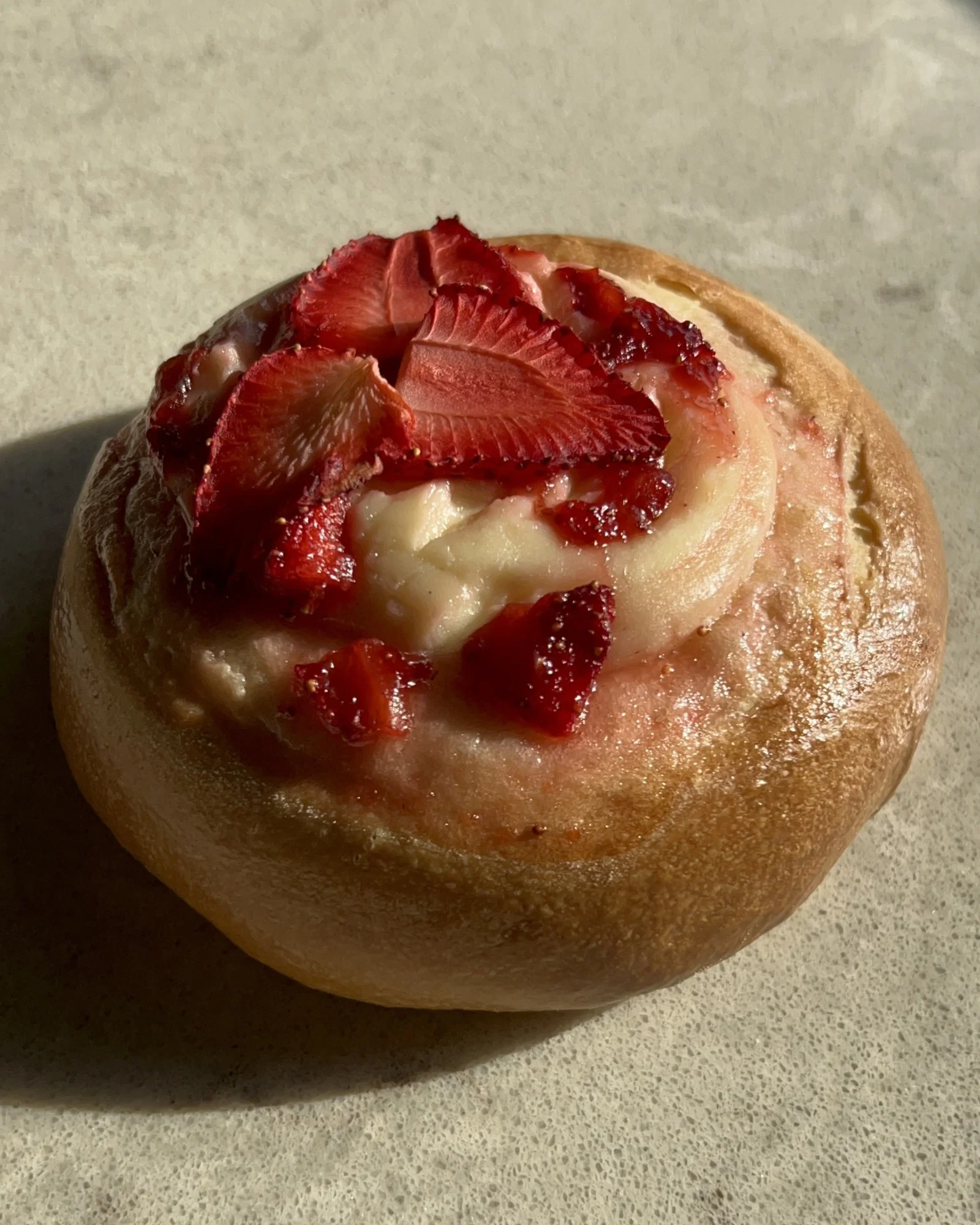
"The more complex stuff like plated desserts, I weirdly see in my dreams, which I know sounds a bit nutty."
Most other times, inspiration starts in a supermarket or grocery store, with a single ingredient. Her father is a food commodities broker, and growing up around his work exposed her to ingredients many home cooks never come across. On a recent trip to China, he brought back a jar of Chinese sesame paste. She had assumed it would be similar to tahini, but found the two quite different: the Chinese version is made from toasted sesame, while tahini is looser and untoasted, so the flavor profiles are far apart.
She likes sweet and savory together in desserts, and adds miso almost anywhere she can. So she started thinking about how to use the sesame paste outside a noodle, dumpling, or broth dish, and landed on a cookie. From there she worked outward, asking what would pair with sesame. A longtime MasterChef Australia viewer, she remembered being intrigued by the combination of sesame and espresso. The result was a sesame, espresso, and dark chocolate cookie, which is now on her feed.
Her process has become smoother over time. She now has a bank of tested base recipes she knows will work, so developing new flavors is mostly a matter of adjusting and some trial and error. Before pastry school, she didn't understand what each ingredient was doing, such as when a recipe calls for baking soda rather than baking powder. She explains that the two are not interchangeable: baking soda is stronger and needs an acidic ingredient in the recipe, so swapping in baking powder means using more of it and removing the acid. Knowing that science, she says, is what makes the work feel natural now.
The brownie she cracked and the babka she hasn't
Aditi gets frustrated when a recipe doesn't turn out the way she wants, and she doesn't let it go until she gets it right. Some dishes she has been chasing for years. Babka is a sore point for someone who specializes in bread. She has been working on it for about three years and has never made one she loved. Other people enjoy them, but something always leaves her unsatisfied.
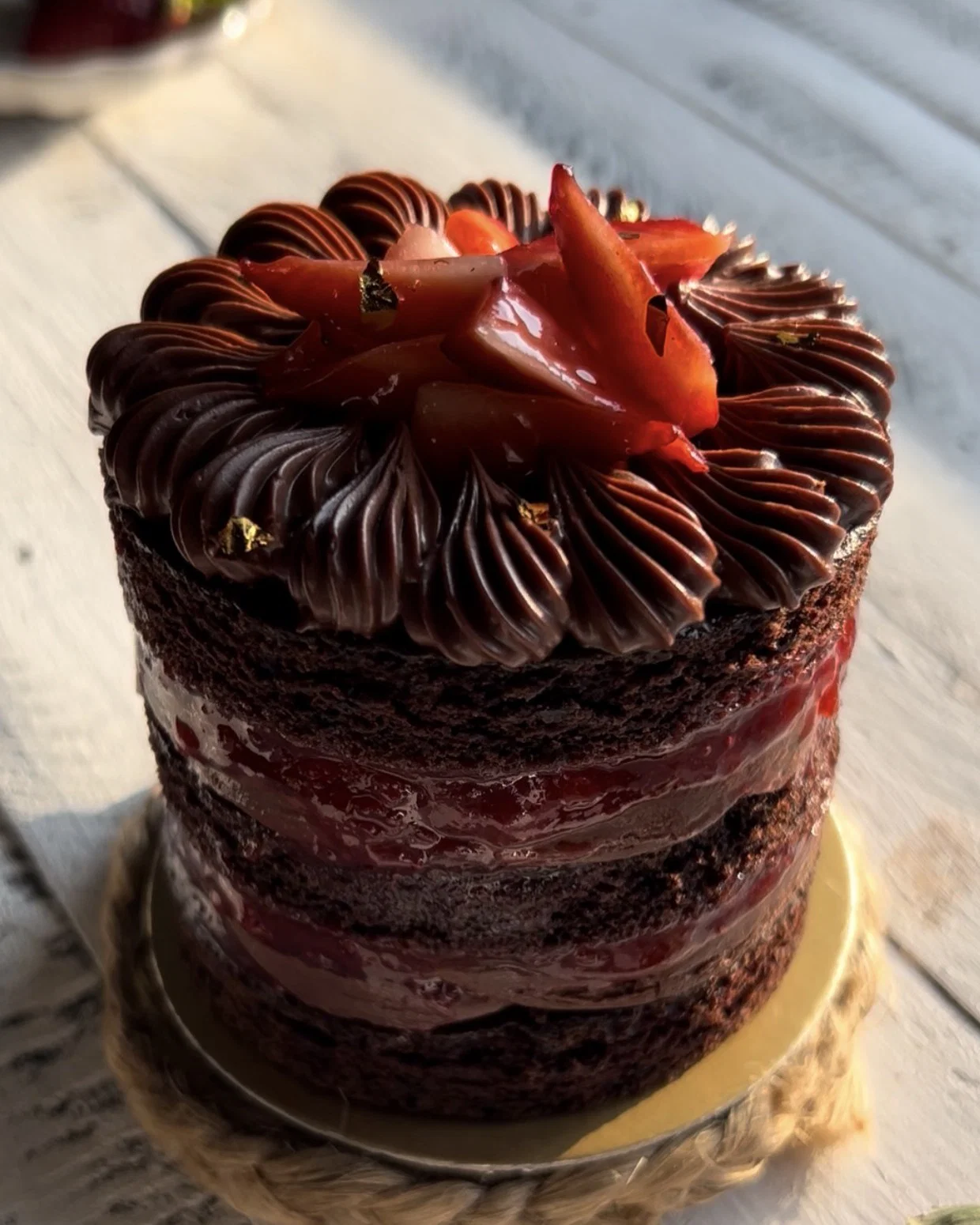
Her first long battle was with brownies. When she started baking, she says, desserts in India mostly meant cakes and pastries, and the boom in French pastry that has since changed what customers know and expect hadn't happened yet. She wanted the fudgy, crackly-topped brownie she saw on Pinterest and YouTube, and it took many trials, along with a proper understanding of the science, to get there.
That brownie is now one of her signatures, and she keeps the recipe to herself because of how long it took to develop. She has also started thinking about where recipes like it could live. She recently set up a Substack, though she hasn't published anything yet, and sees it as a way to reach readers beyond India and to earn something back from the time and money recipe development takes. Ingredients, as she points out, are not cheap.
Seven years without trending audio
Aditi has been posting for seven years and has never used trending audio or similar tactics, which she knows limits her reach. Her account was picking up before pastry school, but she had no time for content while studying, and she suspects much of that early audience drifted away when the posts stopped.
Being a professional also shapes what she shares. She tries to keep her recipes accessible, but to stand apart from other food creators and be taken seriously, she posts plated desserts and techniques that not every home baker can recreate.
She is camera shy and avoided showing her face for a long time. She eventually noticed that even two seconds of her face in a video gets it pushed further, so she began appearing on camera, not to chase followers but to reach the right brands. It still brings strange DMs, including people asking why she isn't smiling, which she considers irrelevant to her work but accepts as part of the game.
"How old are you?"
The bigger challenge, in her view, is being seen as a chef rather than an Instagram creator. Despite her diploma, people often assume she is the latter and that they don't need to take her seriously. Being 25, younger than most chefs doing her kind of work, and a woman makes it harder.
Restaurants have often approached her rather than the other way around, but when she shows up in person, the reaction is frequently confusion, and the first question is almost always her age. She says she understands where it comes from, but she would like people to look at something else.
"Shouldn't my skill be a lot more important than my age or gender?"
Truffle fries, pan-Asian menus, and knowing your market
Aditi describes Mumbai's food scene as diverse, with almost any cuisine represented by at least a couple of restaurants that, in her opinion, do it justice. Her frustration is with what she sees as saturation over the past five years, particularly a wave of pan-Asian restaurants. She points out that Thai, Vietnamese, Japanese, and Korean are distinct cuisines, and she doesn't believe any chef can do all of them justice under one roof. She has the same objection to menus that mix contrasting cuisines, like truffle fries and truffle edamame dumplings side by side, and says that at places like that she sticks to the Indian dishes because those are the ones she trusts them to cook well.
Those opinions feed directly into her work. Aditi does menu consulting for people who want to open restaurants but don't know how, and her central advice is to understand your market. Mumbai, and India more broadly, is huge, and tastes and spending vary from one area to the next. A menu that works in Bandra, where people have more disposable income, may not work elsewhere. In a Bandra cafe, she says, a croissant might sell for 300 to 350 rupees, while in her part of town, where people are less familiar with that kind of food, the same price simply wouldn't make sense to customers. She believes a lack of understanding around pricing and local tastes is why so many restaurants open and close within two years.
For now she doesn't offer full-service consulting, but she plans to get there eventually: menus, recipe development, and SOPs, along with the smaller decisions, down to which fire extinguisher or paper napkins to buy. She feels it is still too early to take that on.
What keeps her going
Asked what keeps her going, Aditi says she has had to fight to prove herself from the start, first with her parents and now with clients, and she doesn't feel she has reached her potential yet. That sense of unfinished work is what drives her.
She knows how easily people leave the industry. In her estimate, around 90% of those who study culinary arts or hotel management in India don't go on to work in the field full time, her own uncle among them. She describes the work as tough and, in India, often poorly paid, and says kitchen environments around the world can be deeply toxic. When friends and family watch The Bear, they text her to ask if it's really like that, and her answer is more or less yes.
Her own stints in commercial kitchens have been short, which she says let her leave relatively unaffected, but she knows people who have been left with PTSD, nightmares, and anxiety. Not having to walk into a toxic workplace every day, she says, is a big part of why she has been able to keep doing this.
Keep being a student
Aditi's message to readers applies well beyond the kitchen, and it grows out of what she has seen as a teacher.
"I would just say keep being a student, because there's just so much to learn."
She has watched ego take over in the chef industry, with people unwilling to learn from someone younger or newer who brings fresh knowledge. She is usually the youngest member of the faculty where she teaches, and she has sometimes seen that met with negative feedback rather than curiosity. In her view, teaching comes with a sense of power and authority that some people enjoy so much they stop wanting to be students at all.
She tries to practice what she suggests. Although she teaches a lot of sourdough herself, she once attended a class by another baker that completely changed what she thought she knew. For her, the point is to take that knowledge in and apply it to her own bakes.
Aditi's path runs from an oven earned through exam results to a psychology degree, a pastry diploma, and a freelance career that spans consulting, teaching, and brand work. Along the way she has kept bread at the center of her craft, kept chasing recipes like her babka, and kept pushing back against assumptions about her age, her gender, and what a chef is supposed to look like. Through all of it, she has held on to the same advice she gives others: keep being a student.
Follow Aditi's work on Instagram at @foodblogandshiz. Chefadora spotlights creators like Aditi because the people behind the recipes deserve to be known as well as the recipes themselves.
Updated on 28 Oct 2026
Your recipes can talk now 👀
Save recipes from anywhere, and get answers, swaps, and help as you cook.
