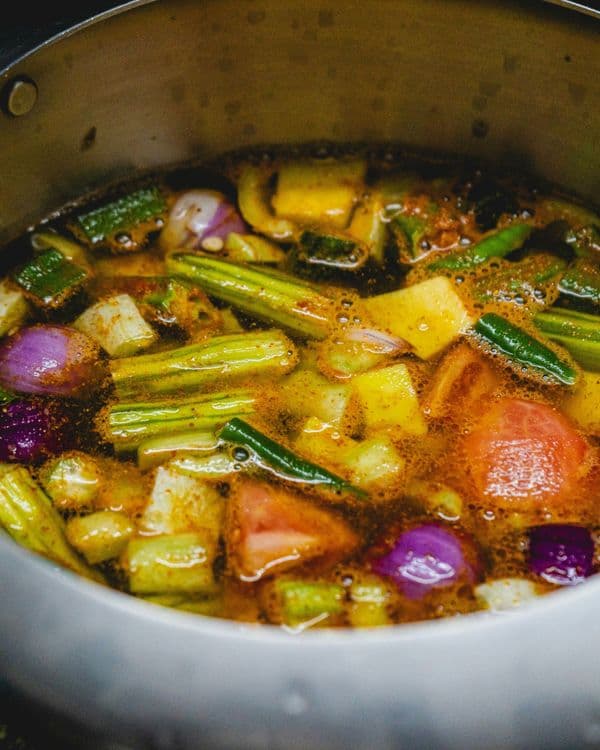
Vegetable Sambar is a quintessential South Indian dish that brings back memories of family meals and festive occasions. The aromatic blend of spices, lentils, and vegetables creates a comforting and wholesome stew. Perfect with rice or idli, this dish is a staple in many households and a true representation of South Indian cuisine.
Chefadora AI has the answer - timers, swaps, step-by-step help.


Wash the toor dal thoroughly and add it to a pressure cooker along with water, turmeric powder, and a pinch of asafoetida.
Cook for 3-4 whistles or until the dal is soft and mushy. Set aside.
Dry roast coriander seeds, dry red chilies, fenugreek seeds, and chana dal until aromatic.
Grind the roasted spices with grated coconut (if using) and a little water to make a smooth paste.
In a pot, add the cooked dal, chopped vegetables, tamarind pulp, and the prepared sambar masala paste.
Add water as needed to adjust the consistency and bring it to a boil. Simmer until the vegetables are cooked and the flavors meld together.
Heat oil in a small pan and add mustard seeds. Once they splutter, add dry red chili, curry leaves, and asafoetida.
Pour the tempering over the sambar and mix well.
Use fresh tamarind pulp for a more authentic flavor.
Adjust the spice level by varying the number of dry red chilies.
Adding a small piece of jaggery can balance the tanginess of the tamarind.
Can I use store-bought sambar powder?
Yes, you can use store-bought sambar powder to save time. Adjust the quantity based on your taste preference.
What vegetables can I use for sambar?
You can use a mix of drumsticks, carrots, brinjal, tomatoes, and shallots or onions. Feel free to add other vegetables like pumpkin or beans.
How do I store leftover sambar?
Store leftover sambar in an airtight container in the refrigerator for up to 2 days. Reheat before serving.
Can I make sambar without coconut?
Yes, coconut is optional. You can skip it if you prefer a lighter version of sambar.
What can I serve sambar with?
Sambar pairs well with steamed rice, idli, dosa, or even vada.